





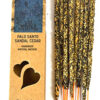
Rosemary Incense Sticks (25g)
$3.25
Rosemary for Remembrance and Protection
A handmade natural rosemary incense with a sharp, green, herbal scent, burned for protection, cleansing, memory and study.
Quick Uses
- Study Aid: Burn a stick at your desk before revising or memorising.
- Protect the Home: Light one at the front door each Sunday as a weekly ward.
- Remembrance: Burn a stick beside a photo of someone who has passed.
How to Use It
Witchcraft & Folk Magick
- Burn it while hanging a rosemary sprig over the door for protection.
- Light a stick during a cleansing of the house after illness or a hard season.
- Use it in a remembrance ritual at Samhain for loved ones who have died.
Hoodoo & Rootwork
- Burn it during a protection spell for the woman of the house, following the old saying that where rosemary grows, the woman rules.
- Smoke a protection bottle of rosemary, salt and pins before burying it by the door.
Ceremonial & Occult Magick
- Use it in solar rites, where old herbals placed rosemary under the Sun.
- Burn it during study of ritual texts or memorising invocations.
Demonology & Black Magick
- Burn it as part of a banishing at the close of a working.
- Light a stick to clear a space before setting up a warded circle.
A Simple Working
- Gather a sprig of fresh or dried rosemary, a jar and a handful of sea salt.
- Light a rosemary stick and pass the empty jar through its smoke.
- Put the salt and rosemary sprig into the jar.
- Say your household’s names over the jar and ask that everyone in it be kept safe.
- Seal the jar and smoke it once more on all sides.
- Place it on a high shelf near the front door.
Pairs Well With
- Rosemary Herb: For protection jars, sprigs over doors and cleansing washes.
- Lavender Incense: A softer partner for peace after cleansing.
- Fluorite: A stone kept on desks for focus and study.
- White Chime Candles: Simple candles for protection and remembrance.
What You Receive
One 25 gram pack of handmade natural rosemary incense sticks, made in India. Each stick burns for approximately one hour.
Origin & Lore
Rosemary is a Mediterranean herb whose name is usually traced to the Latin ros marinus, dew of the sea. In European folk magick it was hung at doors for protection, burned to cleanse rooms, and carried at weddings and funerals.
Its long link with memory is preserved in literature: in Hamlet, Ophelia hands out rosemary with the words that’s for remembrance.
Did You Know?
In 2017 botanists moved rosemary into the sage genus, so its scientific name is now Salvia rosmarinus.
Related products


