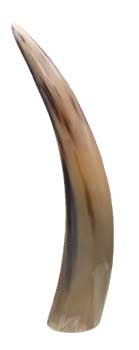

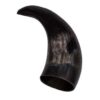
Polished Horn End (12″)
$16.45
A Bold Horn of Plenty for the Altar
A large polished cattle horn, about 12″ long, set on the altar as an emblem of abundance, strength and the horned powers.
Quick Uses
- Abundance Altar: Lay it on your altar with fruit and coins spilling from its mouth.
- Horned God Shrine: Make it the centerpiece of a shrine to a horned deity.
- Hearth Ward: Set it on a mantel as a protective emblem for the home.
How to Use It
Witchcraft & Folk Magick
- Arrange it as a cornucopia at Mabon or Samhain, filled with grain, apples and nuts.
- Set it at the center of a Horned God shrine and leave offerings before it.
Hoodoo & Rootwork
- Fill its mouth with coins and a dressed lodestone on a money altar.
- Keep it on the mantel with a red pepper and a sprig of rue tucked in for household protection.
Ceremonial & Occult Magick
- Use it as an emblem of Jupiter’s abundance or of Mars’s force on the appropriate altar.
- Hold it during invocations of horned or earth deities.
Demonology & Black Magick
- Set it before the triangle when calling a horned spirit, as a sign of welcome and an offering seat.
- Rest a spirit’s sigil inside the horn’s mouth during an evocation for wealth or strength.
A Simple Working
- On a Thursday, set the horn on your altar with its mouth facing you.
- Place three coins and a few cinnamon chips in its mouth.
- Light a green chime candle behind it.
- Ask that abundance pour into your home as from the horn of plenty.
- Let the candle burn down.
- Add a coin to the horn each week.
Pairs Well With
- Green Chime Candles: For abundance and money.
- Cinnamon Chips: A money herb to fill the horn.
- Lodestone: To draw prosperity.
- Altar Cloth: To set the horn on your shrine.
What You Receive
One polished cattle horn end in a glossy finish, approximately 12″ long. Colors vary.
Origin & Lore
Horns were first used as vessels, tools and emblems of the strength of the animal that bore them. In Greek myth the infant Zeus was nursed by the goat Amalthea, and her horn became the cornucopia, the horn of plenty, overflowing with whatever its owner wished.
Horns crown many gods and spirits of the old world, and in the nineteenth century Eliphas Lévi drew his famous horned Baphomet. In modern witchcraft the horns belong to the Horned God, lord of the wild and the hunt.
Did You Know?
The cornucopia, or horn of plenty, comes from the Greek myth of the goat Amalthea who nursed the infant Zeus.
Related products

All Oils