


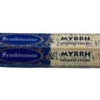
Church incense is graded like wine, and Pontifical is a name given to rich, high grades fit for a bishop’s Mass.
Origin & Traditional Use
Pontifical is a name for a church resin incense blend, part of a range of liturgical incenses with names like Cathedral and Basilica. Such incense is burned in Catholic and Orthodox worship to cense the altar, the Gospel, the clergy and the people, as an image of prayer rising to God. These sticks put that resin in a form that burns without charcoal.
Uses by Tradition
Folk Catholicism & Spiritism
- Novenas: burn a stick each day of a nine-day novena before a saint’s image.
- Home altar: burn as an offering before a statue or holy card, with a vigil candle.
- Blessing the house: burn in each room after sprinkling holy water.
Ceremonial & Occult Magick
- Consecration: the grimoires call for tools and talismans to be fumigated with sweet incense; this church resin suits that purpose.
- Burn during prayers of opening and closing in ceremonial work.
A Simple Working
- Set a saint’s image or holy card beside a white vigil candle.
- Light the candle and say an Our Father or a prayer of your choice.
- Light a stick from the candle and blow it out to an ember.
- Wave the smoke gently toward the image three times.
- Make your request plainly, then thank the saint.
- Let the stick burn out in a holder and keep the candle lit if you can.
Pairs Well With
- A white seven-day candle: for saints and novenas.
- Holy water: for blessing alongside the incense.
- A rosary: for prayer while the stick burns.
- An incense holder: to catch the ash.
Lore & History
Psalm 141 asks: ‘Let my prayer be set forth before thee as incense’, a verse long sung in the Church during the censing of the altar. A Pontifical Mass is one celebrated by a bishop with full ceremony, and grades of church incense take their names from that kind of high liturgy.
What You Receive
Pontifical resin incense sticks, hand-rolled, 6 sticks per pack. Each stick burns for about 60 minutes.
Did You Know?
‘Pontifex’ was a Roman pagan priestly title, often explained as ‘bridge-builder’, long before it became a title of the pope.
| Weight | 0.1 lbs |
|---|
Related products


