



Positive Energy Reversible Smudge Stick (4″)
$5.45
Out With the Heavy, In With the Light
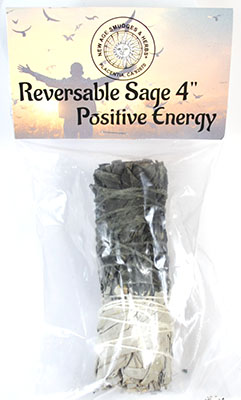
A two-toned sage bundle, black at one end and white at the other, burned to clear heavy energy and then fill the space with brightness.
Quick Uses
- Fresh Start: Burn it after illness, a quarrel or a hard week in the house.
- New Home: Clear the last tenants with black, then bless your own arrival with white.
- Personal Cleanse: Smoke your own aura with both halves before a fresh start.
How to Use It
Witchcraft & Folk Magick
- Burn the black end on a Saturday to clear, and save the white end for a Sunday blessing.
- Open every window during the black half and close them during the white half to seal the new air in.
Hoodoo & Rootwork
- Burn the black half while you sweep the floors out the back door, then the white half while you wash the front step.
- Smoke a white candle with the white half and keep it burning in the main room.
Ceremonial & Occult Magick
- Use the black end with the Lesser Banishing Ritual of the Pentagram, then the white end while you call in light.
- Burn the white half in a rite of consecration for a new temple space.
Demonology & Black Magick
- Clear residue from a room where spirits have been worked using the black end.
- Use the white half to reseal your living space after evocation is done.
A Simple Working
- Set a white chime candle in the centre of your home.
- Light the black end of the stick and walk each room from back to front.
- At the front door, say aloud that what is heavy must leave.
- Let the burn reach the white section.
- Light the white candle from the stick.
- Walk the rooms again front to back, blessing each one.
- Snuff the stick and let the candle burn.
Pairs Well With
- White Chime Candles: For blessing after the clearing.
- Sea Salt: To lay at doorways after the burn.
- Holy Water: To sprinkle at the end.
- Selenite: To keep in a room you want to stay bright.
What You Receive
One 4″ dual-coloured sage smudge stick, black on one side and white on the other, with instructions printed inside the label.
Origin & Lore
This bundle is a modern design for a clearing followed by a blessing. Its pairing of black and white echoes the old folk sense of black as the colour that absorbs and takes away, and white as the colour of blessing and spirit.
Two-stage cleansing has deep roots: many folk traditions sweep or smoke a house out first and then bring in salt, bread or holy water to bless it.
Did You Know?
Bringing bread and salt into a new home is a blessing custom found across Eastern Europe and the Jewish world.
Related products


