



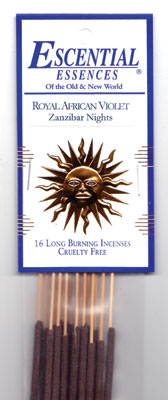
Royal African Violet Incense Sticks (16 Pack)
$6.55
Violet Smoke for Ancestral Strength
A violet floral blend made for gaining strength and the wisdom of elders and ancestors, burned by practitioners at the ancestor altar and before a challenge.
Quick Uses
- Ancestor Altar: Light one stick by a glass of fresh water when you speak to your beloved dead.
- Courage Call: Burn a stick before a test of nerve and ask your line for its strength.
- Wise Counsel: Light one while you journal a decision and listen for an elder’s voice.
How to Use It
Witchcraft & Folk Magick
- Burn a stick beside a photograph of a grandparent on their birthday as a gesture of remembrance.
- Light one on a purple candle when working for dignity and self-respect.
Hoodoo & Rootwork
- Burn it at the ancestor table with fresh flowers and a glass of water.
- Smoke a petition asking your ancestors to guide you through a hard family matter.
Ceremonial & Occult Magick
- Use it as a Jupiterian incense on a Thursday for workings of authority, leadership and wise rule.
- Burn it during pathworking toward a sovereign or kingly image, such as the Emperor card.
Demonology & Black Magick
- Offer it to a spirit of rank whose favour you are seeking, as a gift fit for a noble guest.
A Simple Working
- Set a glass of water and a white tealight on your ancestor shelf.
- Light the tealight, then a Royal African Violet stick from it.
- Speak the names of the ancestors you know, oldest first.
- Ask plainly for the strength or wisdom you need now.
- Sit quietly for the burn of the stick, about half an hour.
- Pour the water outside at the base of a tree when you are done.
Pairs Well With
- Amethyst: A violet stone for calm wisdom and spirit contact.
- Purple Candle: Colour of dignity, rank and spiritual authority.
- Ancestor Offerings: Water, flowers and favourite foods sit well with this smoke.
- Tiger’s Eye: A traditional stone for courage and resolve.
What You Receive
One pack of 16 Royal African Violet incense sticks, strongly scented and made in the USA. Each stick burns for approximately 30 minutes.
Origin & Lore
Royal African Violet is a modern floral blend rather than a traditional recipe. Its namesake, the African violet, is a small flowering plant from the mountain forests of Tanzania and Kenya, not a true violet at all.
Purple has long been tied to royalty in Europe and the Mediterranean, because Tyrian purple dye was so costly that it was reserved for rulers. The blend draws on that association of the colour with sovereignty and dignity.
Did You Know?
African violets were brought to European attention in 1892 by Baron Walter von Saint Paul-Illaire, which is why the genus is called Saintpaulia.
Related products


