

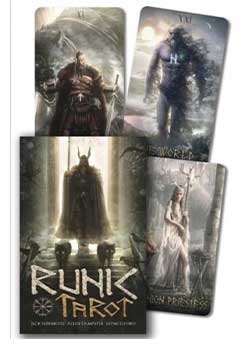
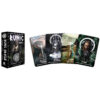
Runic Tarot by Sephiroth & Dempster
$30.75
Norse Myth in the Tarot
A tarot deck steeped in Norse mythology, weaving the runes, skaldic poetry and the warriors of Valhalla into the cards, for readers who want their divination to speak with northern iron.
Quick Uses
- Warrior’s draw: Pull a card before a confrontation or hard choice and read it for where your strength lies.
- Rune pairing: Lay a rune stave beside each card you draw to deepen the reading.
- Altar focus: Stand a card of the god or hero you are honouring on your altar during offerings.
- Pre-ritual check: Read three cards before any working to see whether the time is right.
How to Use It
Witchcraft & Folk Magick
- Draw a single card for the day and let it guide which charm or herb you carry.
- Set a card upright behind a candle as the focal image of a spell for courage or victory.
Ceremonial & Occult Magick
- Use the Major Arcana as pathworking doors, entering each scene in meditation and noting what the figures say.
- Read the deck in a circle cast to the four quarters to ask counsel before planning a larger rite.
Demonology & Black Magick
- Lay a card as the central image of a pact working or hex, naming it as the shape the outcome should take.
- Read before and after an evocation to gauge the spirit’s temper and the results of the working.
- Ask a spirit you have a standing relationship with to answer through the cards in a closed ritual space.
A Simple Working
- Light a red candle and a stick of pine or cedar incense.
- Hold the deck and speak the name of the matter you need courage for.
- Shuffle and draw one card for the obstacle and one for the strength you bring.
- Place the strength card beneath the candle.
- Let the candle burn while you read both cards and write down what they say.
- Carry the strength card with you for the next day, then return it to the deck.
Pairs Well With
- A set of carved runes: a natural partner for a Norse-themed deck.
- Pine or cedar incense: resinous northern woods suit the deck’s tone.
- A red chime candle: for small courage and victory workings with a drawn card.
- A drinking horn or offering bowl: for libations to the gods named in a reading.
What You Receive
One tarot deck themed on Norse mythology, the runes, skaldic poetry and the halls of Valhalla.
Origin & Lore
Tarot began in fifteenth-century northern Italy as a card game, the trionfi, played with an added suit of picture trumps. Its use as a tool for reading fate grew in eighteenth-century France and was shaped into the system most readers know by the occult orders of the late nineteenth century.
This deck recasts the tarot through the world of the Norse gods, drawing on the runes, the poetry of the skalds and the Einherjar, the warriors chosen by the valkyries to feast in Valhalla until Ragnarök.
Did You Know?
In the Hávamál, Odin tells how he hung on the windswept tree for nine nights, wounded by a spear and given himself to himself, before he took up the runes.
| Weight | 1.1 lbs |
|---|
Related products