

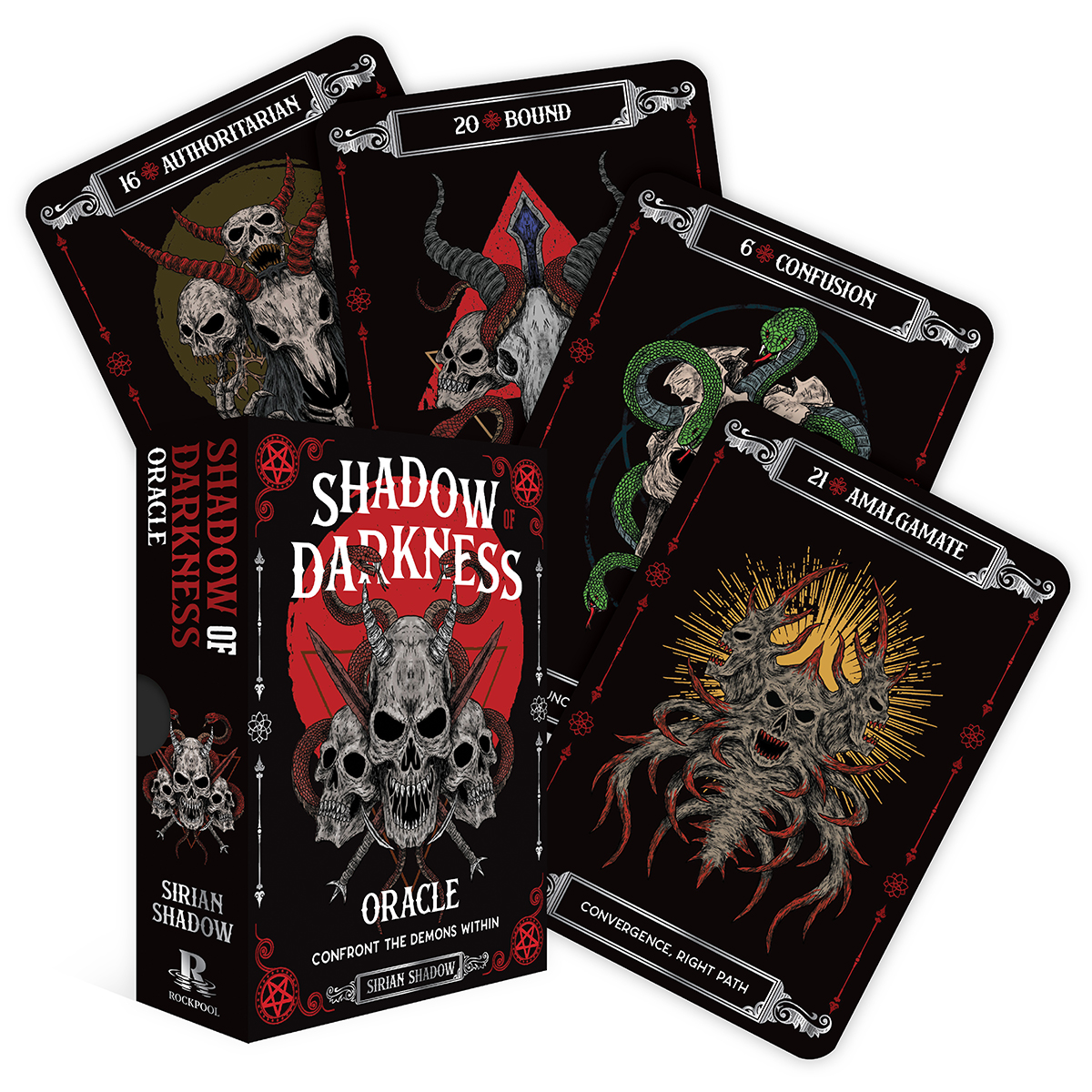

Shadow of Darkness Oracle by Sirian Shadow
$29.65
Shadow Work With a Metal Edge
An oracle inspired by heavy metal for practitioners tired of light and love, built for shadow work: surfacing buried patterns, suppressed feelings and the darker parts of the self.
Quick Uses
- Shadow prompts: Draw a card and journal honestly on what it stirs up.
- Dark moon: Read at the dark moon to face what you have been avoiding.
- Before banishing: Pull a card to name the pattern you need to cut away.
- Self-reckoning: Lay three cards for the wound, the root and the way through.
How to Use It
Witchcraft & Folk Magick
- Read at the waning and dark moon, the traditional times for release and banishing work.
- Write the pattern a card names on paper and burn it in a black candle’s flame.
Ceremonial & Occult Magick
- Use the cards as prompts for introspective trance and self-examination.
- Keep a log of draws to trace recurring patterns across months.
Demonology & Black Magick
- Read before facing your own shadow or a confronting spirit, so you go in knowing your weak points.
- Draw after an evocation to examine what the encounter brought up in you.
- Lay a card as the focal image of a working to bind or banish a habit you name as an enemy.
A Simple Working
- At the dark moon, light a black candle.
- Burn a little dragon’s blood resin or myrrh.
- Shuffle and draw one card for what you have buried.
- Write down, without stopping, everything it brings up.
- Draw a second card for what to do with it.
- Burn the written page in the candle flame and scatter the ash outside.
Pairs Well With
- A black chime candle: for release and banishing.
- Myrrh or dragon’s blood resin: dark resins suited to shadow work.
- An obsidian scrying mirror: the classic stone of looking into the dark.
- A blank journal: shadow work needs somewhere to write it out.
What You Receive
One oracle deck for shadow work, with artwork inspired by heavy metal music, offering prompts and guidance.
Origin & Lore
Oracle decks descend from the fortune-telling cards that spread through Europe from the late eighteenth century: packs with their own fixed images and meanings, free of the 78-card tarot structure, made to be read directly for omens and counsel.
This deck turns the oracle towards shadow work: bringing subconscious patterns to the surface, facing suppressed emotions and the darker aspects of the self. Its art draws on the rebellious imagery of heavy metal rather than the soft palette of most oracles.
Did You Know?
The idea of “the shadow” as the hidden, rejected side of the personality comes from the Swiss psychiatrist Carl Gustav Jung.
| Weight | 0.9 lbs |
|---|
Related products


Crystal Balls