



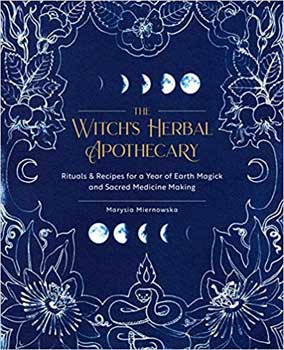

Witch’s Herbal Apothecary by Marysia Miernowska
$30.79
Seasonal Green Craft Through The Year
A wheel-of-the-year guide to growing, gathering and preparing plants, for witches who want their herb work tied to the seasons.
Quick Uses
- Garden Rite: Plant one herb from the book at the spring equinox and tend it as a living ally.
- Wild Harvest: Gather a plant on a dry morning and leave a small offering where you cut it.
- Seasonal Shelf: Keep a jar of dried herbs for each sabbat and use them in that season’s rite.
How to Use It
Witchcraft & Folk Magick
- Follow its seasonal framework and match your planting, harvesting and drying to the sabbats.
- Keep a plant journal noting where and when you gathered each herb and how it was prepared.
Hoodoo & Rootwork
- Use the herbs you grow and dry yourself to fill mojo bags and dress candles.
- Make spiritual baths from your own garden in place of bought herbs.
Ceremonial & Occult Magick
- Harvest according to planetary hours, a solar herb at the hour of the Sun.
- Consecrate your drying racks and jars with the four elements before the first harvest.
Demonology & Black Magick
- Gather graveyard and shadow plants in the dark half of the year, with offerings, for necromantic and protective work.
- Dry and store herbs for spirit offerings so you always have something to give.
A Simple Working
- On a dry morning near the full moon, take a basket and a small knife.
- Bring a pinch of oats or a little water as an offering.
- Choose one herb in season, from the garden or the wild.
- Ask permission before you cut and leave the offering.
- Bundle and hang it to dry.
- When dry, burn a pinch on charcoal and give thanks.
Pairs Well With
- Mortar and Pestle: For grinding your dried herbs.
- Amber Glass Jars: To store your harvest.
- White Sage: For cleansing your workspace.
- Charcoal Discs: For burning herbs as offerings.
What You Receive
One copy of Witch’s Herbal Apothecary by Marysia Miernowska, a 7.5″ x 9.2″ paperback with 224 pages.
Origin & Lore
A guide to green craft organised around the wheel of the year. It teaches growing plants, wild and garden harvesting, processing herbs and making preparations in time with the seasons, framed as Earth magick of life, death, renewal and rebirth within traditional folk herbalism.
Village wise women and cunning folk kept much of Europe’s plant knowledge for centuries, gathering herbs at set times of year. Midsummer was a key harvest night, when plants such as St John’s wort were picked and hung over doors.
Did You Know?
The word apothecary comes from the Greek apotheke, meaning a storehouse.
Related products


